Tuesday, 27 January 2015

Data Elements

Cyclic Redundancy Check 
Cyclic Redundancy Check or CRC for short is the method that detects data transmission errors. These transmissions sectioned up into predetermined lengths by a divisor. The remainder numbers are added onto and sent with the message. When the message arrives the computer recalculates the remainder and compares it to the sent remainder. If the numbers do not match up then an error is detected.

Encapsulation-Frames, Packets
Encapsulation allows one network to send it's data to another through network connections. The data that is sent from one network to the other is carried by packets which section up the data and send it over piece by piece. The result is then shown in frames which are a unit of data that help identify packets of data. Frames can also determine how data receivers interpret a stream of data from the source.

Datagrams
A datagram is a packet of data that is sent over an Internet Protocol Network.

Addresses
An address is used to identify a computer or other devices when they connect to a TCP/IP network. The IP addresses given must be unique because otherwise it would be impossible to communicate with other devices.

Sequencing
Sequencing allows for large packets of data to travel across networks quickly but in small amounts and then arrive at the destination in a readable state.


Monday, 26 January 2015

Communication Models and Protocols

Models

Open System Interconnect
The Open System Interconnect or OSI for short is what defines a networking framework for setting protocols in 7 different layers. Control is passed from one layer to the other starting at layer one which is the application layer all the way to the bottom layer which is the physical layer.


TCP/IP
TCP stands for Transmission Control Protocol and IP stands for Internet Protocol. It is a language that a computer uses in order to gain access to the internet. It contains a whole host of protocols that are designed to connect to a network that allows the host access to the internet TCP/IP has 4 layers.


Protocols
Wi-Fi (802.11g)
The 802.11g specification of Wi-Fi is the most common Wi-Fi specification because it offers speeds of 54 megabits per second over a relatively short distance.

Wi-Fi (802.11n)
The 802.11n specification of Wi-Fi is similar to the 802.11g but it instead offers faster speeds of 300 megabits per second over the same distance.

Bluetooth
Bluetooth is a wireless technology that allows devices with Bluetooth switched on to communicate with each other. It is usually used for connections between a desktop computer and a laptop over a short range. Infrared used to do similar things until Bluetooth was created which did all the things Infrared did but it solved a lot of the problems that Infrared had.

3G and 4G
3G is a data transfer technology for mobile phones. It allows people outside of Wi-Fi hot spots to have access to data and transfer it. 3G allows for speeds of at the minimum 2 megabits per second. Some standards of 3G have been known to have speeds of up to 14.4 megabits per second. 4G does all the things 3G does but at faster speeds.

Wireless Security Protocols (WEP, WPA)
WEP is short for Wired Encryption Protocol which is a standard part of wireless networks. It was designed to offer the same security as a wired connection but because of the use of radio waves it is easier to eavesdrop on wireless connections. WPA stands for Wi-Fi Protected Access which was developed to act on WEP's security issues but to use WPA the devices had to be re-configured which annoyed a lot of people.   


Access Methods

What Is CSMA? 
CSMA stands for Carrier Sense Multiple Access. CSMA is a set of protocols or rules that decide what a network should do when multiple devices try to use the same data channel at the same time. A data channel is a route that data from devices travel through. Ethernet networks commonly use CSMA because it monitors the traffic on the line at stations being used. If there is no data being sent out then the station in use can submit data.n When two stations submit data at the same time the data collides and is then detected, after a random time period the two stations will again attempt to submit data.

What is CA? 
CA stands for Collision Avoidance which is when two nodes(connection points) try to access the same piece of data at the same time but the situation is then destroyed. This then means that data can be sent and it will not collide with other data trying to access the same thing.

What is Token Passing?
This is a communications access method that repeats the same frame(token) that is sent from the controlled computer. When a computer sends a message it looks for an empty token and when it does find one it fills it with the address of the destination and all of or most of the message. Nodes constantly search for tokens that are a recipient of a message so that it can mark the token as empty. Token passing is found on the bus and ring topologies.  

Network Software

What is Network OS?
An Network Operating system has unique functions to help connect computers and devices within
the Local Area Network radius. A network operating system allows computers to share data and other things like printer and file sharing amongst computers connected to the same network. The most known operating systems include Microsoft Windows and Mac OS X.

Connection Software 
Connection software is created to help set up and control or monitor the computers networks. Connection software is important for the modern computer networks because it includes internet access and it allows users to share programs and documents with each other.

Thursday, 22 January 2015

Network Services

What is WAP?
The Wireless Access Protocol, or WAP for short, was a communication protocol that allowed wireless device users to gain access to information almost instantly It was later replaced by 3G and then in 2013 4G was developed which is considered to be the most advanced form of network  access outside of WiFi. 

What is Packet Switches?
Packet Switches is when data is divided up into small sections or packets and then sent out to it's intended destinations. When the data arrives at it's intended places it then re-compiles into the original message. Packet switching usually takes place on WAN networks or Wide Area Networks this is so that messages can be sent without slowing down network efficiency.

What is ISDN?
ISDN stands for Integrated Services Digital Network and is a data transfer technology that is able to transfer data much quicker than the usual dial up modem. It also allows for more data to be sent at one time because it enables a wider bandwidth digital transmission.

What is Broadband(ADSL)?
ASDL stands for Asymmetric Digital Subscriber Line. It is used for connecting to the internet. ADSL allows for more data to be sent over copper telephone lines. 

Tuesday, 20 January 2015

Network Topologies

Star Topology
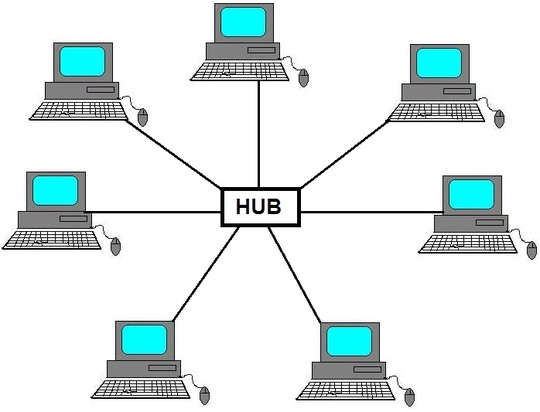
The star topology is a local access network in which all computers are connected to a central hub. it is known as a star because of the shape this type of network usually takes up. Star topology is used mainly in schools and businesses because it is considered to be the most reliable topology.


Mesh Topology
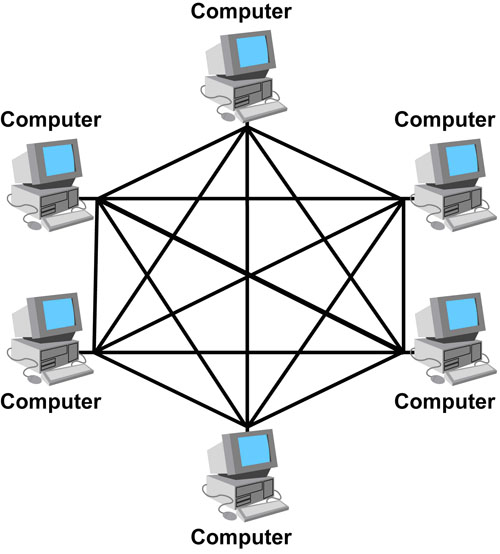
The mesh topology is a type of network in  which computers transmit their own data and is then capable of passing this data on to other computers. Routers are considered to be the best pathway for the computers data to go through. If hardware failure did occur it would mean that there are still routes for the data to go through.


Bus Topology
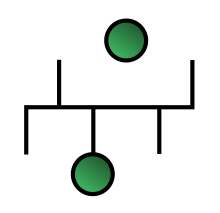
The bus topology is a type of network in which each computer is wired up to a cable or backbone. Bus networks are at their most efficient in small groups meaning less cable is needed but if any section of the network fails all transmissions fail.


Tree Topology
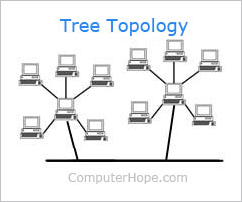
The tree topology is a mixture of both the star and bus topologies. It is the most common network setup that is similar to the bus and star topologies. If a computer was to fail the two stars would be unable to communicate with each other but they can still communicate with those in the same branch.
  
Ring Topology
The ring topology is when the computers are set up so that they make a ring shape. This means that small amounts of data will travel around until it reaches the intended destination. 


Networks

WAN (Wide Area Network)


WAN is a network that covers a huge area and usually consists of two or more LAN networks. They are often connected by telephone lines or leased lines and satellites. The internet is considered to be a wide area network because lots of people can be connected to it. 

LAN (Local Area Network)
LAN covers a very small area and usually has two or more computers connected up to it. Most LAN’s cover a building or a group of buildings. LAN’s are mainly used for when businesses want the computers to be connected to each other in a small space.


Wireless
A wireless connection is when a computer or certain device is connected to a network without any wires. These can often be cafes or Wi-Fi hot-spots that have Wi-Fi and allow for devices to be connected to it. Hot-spots are free to connect to areas of Wi-Fi that are often stationed in cities covering wide areas.


Friday, 16 January 2015

SkyNetAssignment

Networks

·         ADSL Broadband
(Asymmetric Digital Subscriber Line)
ADSL broadband is a connection provided over home telephone lines. BT owns all of the UK's landline cables, so when you have an ADSL connection you need to pay BT for your phone line. If you already have an existing phone line, the broadband is added onto the package and has to be paid monthly.

·         ISDN
Integrated Services for Digital Network (ISDN) is a set of communication devices for digital communication of voice, video, data, and other forms of data over the traditional circuits of the public switched telephone network. It was first defined in 1988 in the CCITT red book.


·         Packet switches
Packet switching is a networking method that groups all transmit data – regardless of content, type, or structure.
Packet-switched networks move data in different, small blocks ‘packets’ based on the destination address in each packet. When received, packets are put together in the proper sequence to make up the message.

Wireless Access protocol
Wireless Application Protocol (WAP) is a technical standard for accessing information over a mobile device wirelessly. A WAP browser is a web browser for mobile devices such as mobile phones and tablets that uses the protocol.

Benefits
·         Broadband: A broadband connection is "always on"
You do not have to wait for dial-up connectivity if you use the same route to the Internet. This means that you are able to get on the internet quicker and as a result be more productive without having to wait for a connection.

·         As broadband comes at a fixed price, you can budget effectively.
Many websites now contain different types of media. This means that they don't just have large amounts of writing and limited images, but have interactive features like streaming sound and video and other media. They are designed to be used via broadband connection.

Packet Switches:
·         It makes very effective and quick use of the network - no tied-up lines.
·         It can easily get around broken sections of the network.
·         As customers increase, the network can be expanded slowly compared to circuit switching that has to be done quickly.


ISDN:
·         Like the telephone network you only pay for the time you use during your phone call, and a monthly access charge.
·         Switched service flexibility meaning you can change provider much easier.
·         ISDN is an update of the public telephone network it is a switched service. You can call anyone who has ISDN access in any country. You can also make standard voice calls on the telephone network, or data calls to people who use modems.


·         ISDN calls are digital from end to end, so you get higher speeds, quality of sound and reliability of the signal being sent and faster call set-up than on the telephone network.

·         A single access line can carry voice, image, data and video applications.


·         Perfect for video conference calls with both quality service and the high transmission speeds required for video.


·         WAP opens a host of opportunities for carriers to generate on-going revenue streams, secure customer loyalty and develop unique services that will allow differentiation from the competition.

·         One worldwide standard that is device-independent and bearer-independent assures developers of a broad, ever-expanding market for content and applications.

·         The increasing popularity of WAP will generate tremendous demand for new devices to accommodate WAP's capabilities, new infrastructure to handle the increased demands on operator's systems and more gateways to handle the information flow between Internet and wireless operator networks.

·         WAP offers an easy-to-use and highly portable communications and information tool. Devices using WAP-based micro browsers can access an array of innovative, value-added services, which are rapidly coming to market.

When/Where?
·         ADSL
o   When: ADSL broadband should be used when there is no separate internet connection in the area or if you have a phone package with the provider.
o   Where: ADSL broadband can be used in homes across the UK, but quality can drop the further from a telephone exchange you are.
·         ISDN
o   When: ISDN Can be used if a faster internet connection is required, offering up to double the speeds of a standard connection.
o   Where: ISDN is commonly used in urban areas in the USA and Europe, ISDN is not recommended in rural areas.
·         Packet Switches
o   When: Packet switches are better used in businesses which send and receive lots of data and need to space it out to avoid slowing the network when large amounts of data is sent.
o   Where: In businesses which send and receive large amounts of data through a bottlenecked system
·         Wireless Access Protocol
o   When: Wireless Access Protocol is used to convert standard web pages to be viewed on mobile devices like a phone, IPod or tablet which has access to the internet
o   Where: In public places like stations or airports, where there are no desktop PCs available for use

Limitations
·         Packet switches
o   The time to do the process changes every time.
o   Not good to carry small data packages.
o   The data has to be reassembled again.
·         ISDN
o   It is very expensive than a telephone system.
o   It requires specialised devices to do this.
o   This is slow when compared to newer technology.
·         Wireless Access Protocol
o   Low bandwidth
o   Small displays, mostly monochrome
o   Limited memory
o   Can’t use it to transfer large amounts of data
o   It is expensive to use
·         ASDL
o   Signal strength decreases with distance
o   Can’t handle VPN (Virtual Private Networking) very well, but it will work.
o   Not good for things like web conferences


References

Wireless Access Protocol diagram: http://www.althos.com/sample_diagrams/ag_WML_WAP_Server_Operation_low_res.jpg

Thursday, 15 January 2015

SkyNet

In this blog post I will be talking about the different types of communication devices and how they connect to a network. I will also be talking about their limitations. 

A DTE is equipment or software that is capable of converting information to signals and reconverting signals that it then receives.  Data Terminal Equipment does not usually communicate with other DTE’s this is because data communication equipment does this task. Examples of DTE include printers, routers and application servers these devices will receive signals and then convert them to bring the results to the user.  A limitation of this is that if there is a lot of traffic on the network it can take a while to receive the results from the DTE  

A DCE is computer equipment that is used to set up, maintain and stop communication network sessions between the source and the final point. A DCE is connected to a DTE this can then allow for transmission signals to be converted. An example of a DCE is a modem because it provides a path for communication. A limitation of a DCE is that if the cable used to connect up to the modem is faulty it cannot communicate with the DTE.

A laptop can with an Ethernet cable can be used to connect to a network because the Ethernet cable can be connected into the modem in the WAN or internet port. This then allows the laptop to be connected to a network and receive signals from the DCE. A limitation of this can be that when more people want to connect to a network using Ethernet cables the building can start to fill up with cables.

Smartphones are phones that have the capability of doing more than just making phone calls and receiving text messages. A smartphone can connect to a network by connecting to Wi-Fi wirelessly using a DTE. A limitation of using Wi-Fi is that you can have limited connections to Wi-Fi particularly when you have lots of obstacles like walls inbetween.

A network switch is used to accommodate lots of computers at the same time meaning that the internet speed does not slow down as a result. It is particularly helpful for I.T businesses that could have hundreds of computers on the internet at the same time.

A router is used for transmitting information from one computer to the other. A router is most commonly used for relaying information from the internet to your computer.

A wireless access point or WAP is a device on a LAN that allows internet capable wireless devices to connect to a network. WAP’s have radio transmitters and antennae which allow for connectivity between devices or the internet.

A modem can be an internal or external that’s function is to transmit signal from one device to the other using communication lines. Broadband modems transmit between two devices. It is usually used for connecting a single computer to a network or having the capabilities of playing online on games consoles. 

A server can store save and keep files as well as sending data to other computers. Many businesses use local servers so that each computer can be connected to each other.